

When choosing a router, many people will assume that the bigger the Megabyte, the better, because high megabytes seem to mean faster network speeds and better performance. However, the reality is not so simple.
Megabits in relation to network speed
The megabits of a router usually refer to its wireless transmission rate, such as 300Mbps, 600Mbps, 1200Mbps, etc. This value represents the maximum transmission speed of the router's wireless network under ideal conditions. In practice, however, network speed is affected by a number of factors, including:
Broadband bandwidth: The router's transmission rate must match the broadband bandwidth. For example, if the home broadband is 100Mbps, then choosing a 300Mbps router is sufficient, because the router's transmission speed will not exceed the broadband bandwidth.wireless router
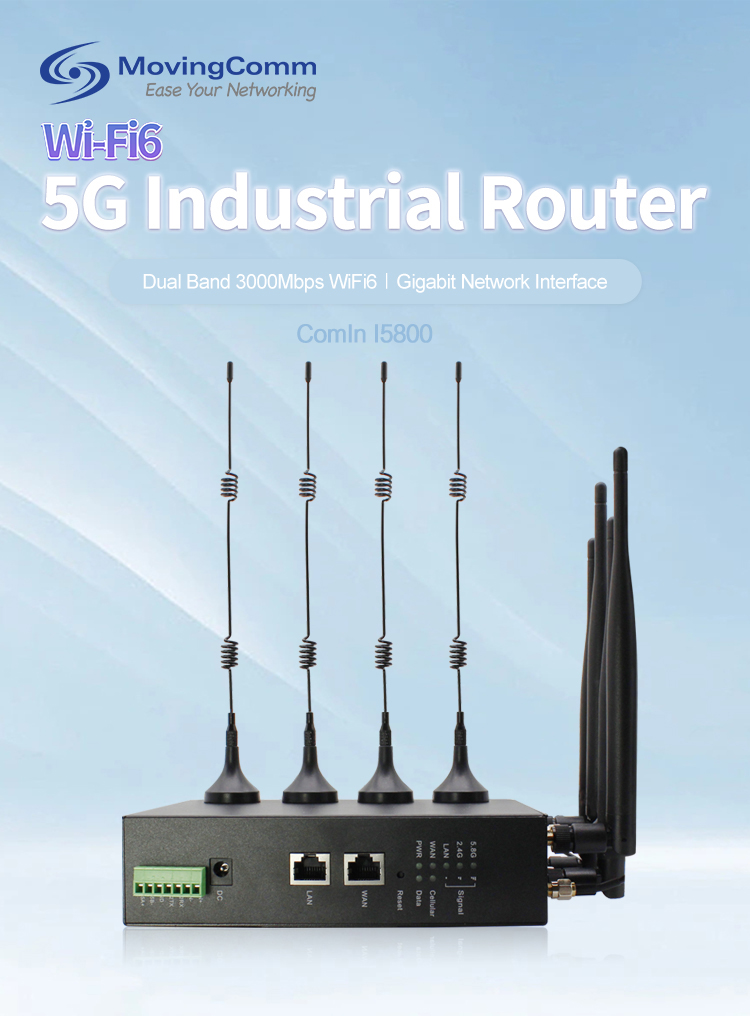
Device compatibility: The wireless card performance of the device connected to the router (such as a mobile phone, computer, etc.) also affects the actual speed. If the device does not support the high megabit wireless standard, then the high megabit router will not be able to take advantage of its advantages.5G industrial router
Environmental factors: The coverage and stability of wireless signals are affected by obstacles such as walls and furniture. Even if the router's Megabyte is very high, if the signal coverage is not good, the actual use effect will be greatly reduced.industrial router
Other key factors of router performance
In addition to megabits, the performance of a router depends on the following aspects:
Processor and memory: A high-performance processor and enough memory can improve the data processing power of the router, supporting more concurrent connections and complex data processing tasks.
Antenna design: Good antenna design can enhance the coverage and stability of the signal. For 5G routers with SIM card slots, the antenna needs to support 5G bands to ensure high-speed mobile network connections.
Security features: Powerful firewall and VPN features protect the security of the network and prevent unauthorized access and data leakage.
Management and Configuration: The easy-to-use management interface and flexible configuration options help users better manage the network and optimize device connectivity and data transfer.
Select the right router
When choosing a router, you should decide according to the actual needs and usage scenarios:
Home use: For the average home user, choose a router that supports dual-band (2.4GHz and 5GHz) to meet daily needs. If there are more devices online at home at the same time, you can choose a 600Mbps to 1200Mbps wireless router.
Enterprise and industrial use: For enterprise or industrial environments, you need to choose a high-performance Gigabit Ethernet wireless router that supports more concurrent connections and high-speed data transfer. At the same time, considering the needs of remote management and device monitoring, 5G routers with SIM card slots are a good choice.
Mobile and temporary use: In scenarios where frequent mobile or temporary network construction is required, 5G WiFi routers with SIM card slots can provide convenient network connections, suitable for outdoor activities, temporary office and other occasions.
In short, the Megabyte of a router is not the only metric. Choosing the right router takes into account network speed, device compatibility, environmental factors, and other performance indicators of the router. Only on the premise of meeting the actual needs, can the advantages of the router be truly played to provide users with a stable and efficient network experience.
