

Network security is the foundation of all other information security systems. Network security is a mature market with strong and mature suppliers and start-ups that constantly bring new and better technologies.
This paper will introduce the key concepts of modern network security architecture.wireless router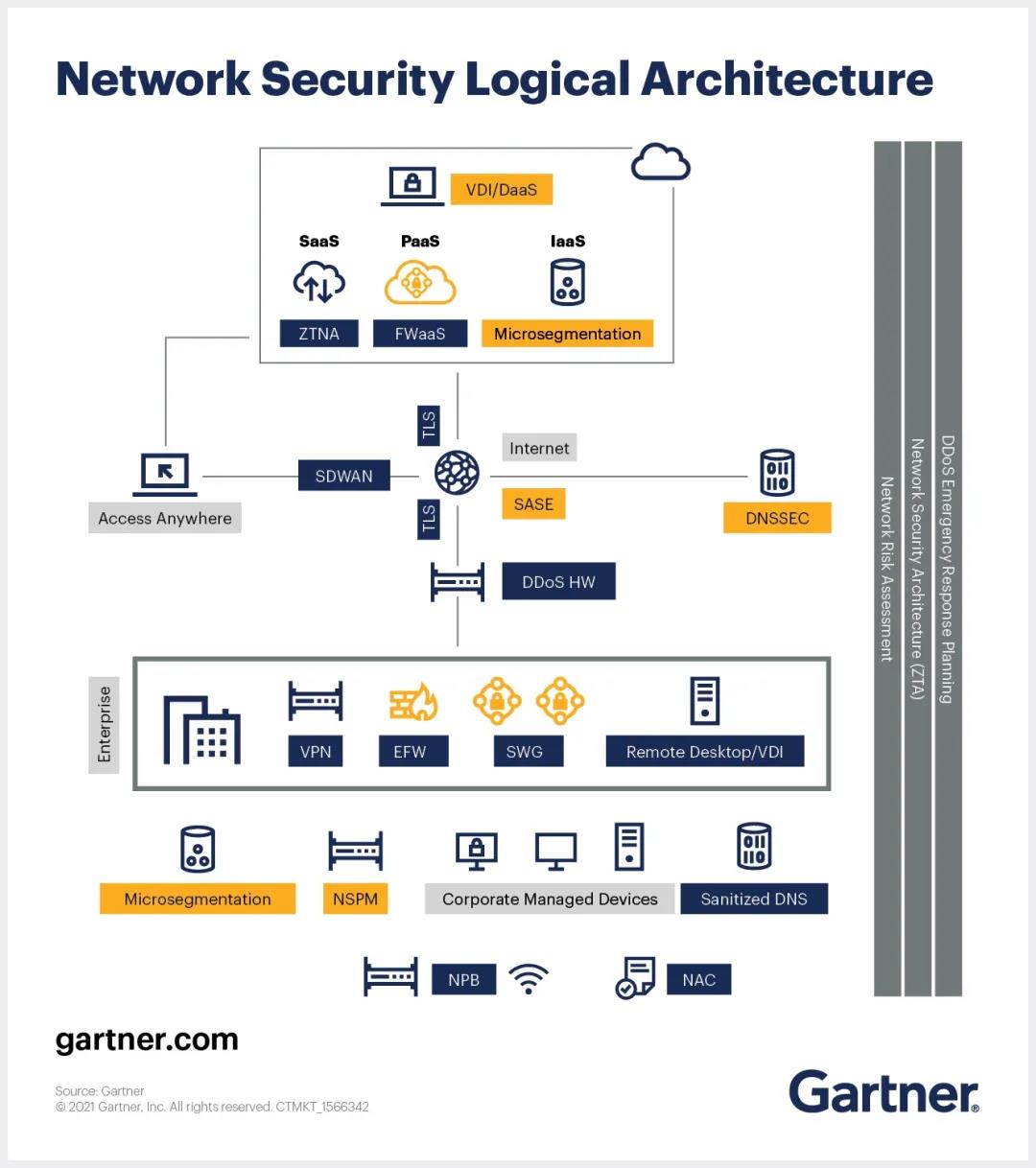
Network Security Architecture and Management
Network Security Architect is responsible for overseeing various aspects of security architecture, including cloud security, network security, and data security. Depending on the size of the organization, these responsibilities might be divided among multiple individuals or consolidated under a single role. Regardless of the structure, it is crucial to designate leaders and empower them to make critical decisions.eaton industries manufacturing gmbh route de la longeraie 7 industrial router
Network Risk Assessment involves the comprehensive process of identifying, controlling, and mitigating known and potential security risks within a network. This process is essential for effective enterprise network security management. By conducting a thorough network security assessment, organizations can identify and organize their network assets, understand current security risks and vulnerabilities, and implement security hardening measures to ensure the network's safe operation.elgin 3 story apt industrial building conversion near route 25 wireless CPE
Zero-Trust Architecture (ZTA)* is a cybersecurity framework that assumes all network participants are untrustworthy. Instead of focusing on securing the network, ZTA aims to protect the assets within it. This approach is highly dependent on user behavior, where an agent evaluates each access request based on a risk profile that considers various contextual factors such as application usage, location, user identity, device status, time of access, and data sensitivity. ZTA is an architectural concept rather than a specific product, and organizations can develop it using various technical elements.,electronic sorting machine industrial craft default route not working
network firewall is a mature security solution designed to prevent unauthorized direct access to network servers hosting organizational applications and data. Firewalls can be implemented in both local and cloud environments. In cloud environments, Infrastructure-as-a-Service (IaaS) providers often deploy specialized cloud-centric products to provide similar functionality.fdr praises industry santa anita race british rout italians
The secure web gateway has evolved from primarily optimizing internet bandwidth to now focusing on protecting users from malicious online content. Standard features include URL filtering, anti-malware protection, HTTPS decryption and inspection, data loss prevention (DLP), and Cloud Access Security Brokers (CASBs).
Remote access increasingly relies on Zero-Trust Network Access (ZTNA) instead of traditional Virtual Private Networks (VPNs). ZTNA makes network assets invisible to users and grants access to specific applications based on context-driven profiles.
Intrusion Prevention Systems (IPS) are used to detect and block attacks before they can exploit vulnerabilities, such as unsupported packaged applications. While IPS features are sometimes integrated into other security products, standalone IPS solutions remain available. With the rise of cloud-native security controls, IPS is experiencing a resurgence.
Network Access Control (NAC) offers visibility into all network entities and policy-based control over network access. Access policies can be defined based on user roles, authentication methods, or other criteria.
The network message broker device manages network traffic efficiently, enabling other monitoring devices like network performance and security monitors to function optimally. Its capabilities include risk-level identification through packet filtering, load distribution, and hardware-based timestamp insertion.
DNS Filtering leverages domain name system services to prevent end users, including remote workers, from accessing websites with a poor reputation, thereby enhancing overall network security.
DDoS Defense strategies aim to minimize the impact of Distributed Denial of Service (DDoS) attacks on network operations. These defenses encompass multiple layers of protection for internal network resources and external assets, such as Internet Service Providers (ISPs) and Content Delivery Networks (CDNs).
Cybersecurity Policy Management (NSPM) encompasses analysis, auditing, optimization of cybersecurity guidelines, change management workflows, rule testing, compliance assessments, and visualization. NSPM tools provide a visual representation of all network devices and offer comprehensive firewall access rules covering multiple network paths.
Differential Segmentation is a technique aimed at preventing lateral movement by attackers already within the network, thus protecting critical assets. Tools for differential segmentation are categorized into three types:
1. Web-based tools: Often utilized with Software-Defined Networks (SDNs).
2. Physical appliances: Dedicated hardware solutions.
3. Cloud-based services: Offered as part of managed security services.
