

With the rapid development of the Internet, the IPv4 address space has been unable to meet the growing network demand. To solve this problem, IPv6 came into being. However, with the rise of emerging technologies such as 5G, the Internet of Things, and cloud computing, IPv6 has become inadequate in some aspects. For this reason, IPv6+ came into being and became a new generation of network technology.Wireless Router
IPv6: a new generation of Internet protocols
IPv6 (Internet Protocol Version 6) is a next-generation Internet protocol with the following features:
Address space: IPv6 uses a 128-bit address space, which in theory can provide almost unlimited IP addresses, solving the problem of IPv4 address exhaustion.
Simplified packet header: IPv6 packet header uses a more concise design to improve the efficiency of data transmission.
Built-in security: IPv6 natively supports IPSec, providing better security for network communications.
Stateless Address Automatic Configuration (SLAAC) : IPv6 devices can automatically configure IP addresses, simplifying network management and maintenance.m2m industrial cellular router
IPv6+ : IPv6 enhancement and innovation
IPv6+ is a series of enhancements and innovations based on IPv6 for emerging network requirements. Here are the main features of IPv6+ :
Technological innovations: IPv6+ includes a series of technological innovations, such as SRv6, Network slicing, IFIT, BIERv6, APN6, etc.managed ethernet router industrial
Flexible routing and forwarding: SRv6 technology enables more flexible network path adjustment and improves data transmission efficiency.
Fine-grained control of network resources: Network slicing technology can isolate network resources and customize services to meet different service requirements.
Enhanced network monitoring and troubleshooting: IFIT technology provides real-time, accurate network status awareness to help optimize the network.
Improved multicast transmission: BIERv6 technology simplifies multicast network deployment and improves transmission efficiency.
Application aware network: APN6 technology realizes intelligent scheduling of network resources by identifying application types and requirements.
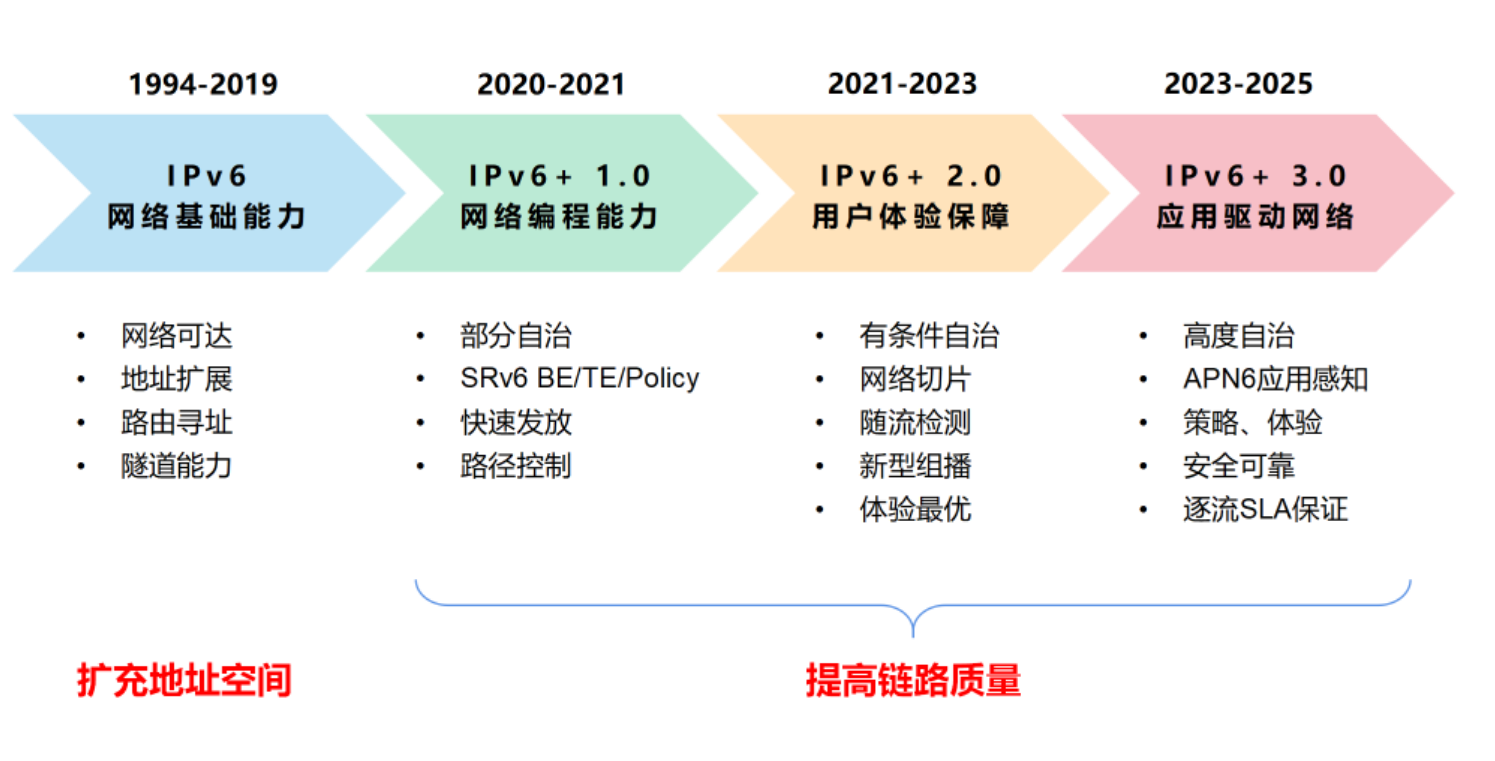
Differences between IPv6 and IPv6+
Technical positioning: IPv6 is the basic network protocol, and IPv6+ is a series of enhanced and innovative technologies based on IPv6.
IPv6 provides basic network connectivity functions, and IPv6+ adds advanced functions on this basis, such as SRv6 and network slicing.luanne's route 68 industry pa
Technological innovation: IPv6+ is richer in technological innovation and ADAPTS to emerging network needs such as 5G, the Internet of Things, and cloud computing.
Application scenarios: IPv6 applies to traditional network connection and communication requirements. IPv6+ applies to more complex network environments and application scenarios.
Technology maturity: IPv6, as a mature protocol, has been widely deployed; The technologies included in IPv6+ are still being developed and gradually standardized.medline industries routing guide
Iv. Summary
Although IPv6 and IPv6+ are closely related, there are obvious differences. IPv6 is the basic protocol, which solves the problem of IPv4 address exhaustion. IPv6+ enhances and innovates on the basis of IPv6 to meet emerging network requirements. With the continuous maturity and popularization of IPv6+ technology, we have reason to believe that it will inject new vitality into the construction of China's network power and promote Internet technology to a higher level.maestro 3g industrial router
