

Wi Fi 6 (formerly known as IEEE 802.11. ax), also known as the sixth generation wireless network technology, has been established and promoted by the Wi Fi Alliance for over 4 years since 2019. According to the previous 5-6 year update rhythm of the Wi Fi Alliance, Wi Fi 6 has also reached a time when it needs to be updated and replaced. According to data from the Wi Fi Alliance, the demand for wireless bandwidth in the next generation of 360 degree AR/VR applications has reached up to 200Mbps, indicating that the current Wi Fi speed has gradually reached a bottleneck for the new generation of entertainment devices, and now it is time for faster, more stable, and lower latency network connections to provide a better user experience. Moreover, research reports from 2000 gamers in the UK and the US also showed that up to 97% of gamers have experienced latency issues, further emphasizing the importance of low latency for wireless connectivity. Wifi 6 Outdoor Wireless Ap wego industrial router,
Based on the above situation, the Wi Fi Alliance has launched a new generation of IEEE 802.11be standard, Wi Fi 7, to meet higher network connectivity requirements. According to the Wi Fi Alliance, Wi Fi 7 will further enhance the functionality and performance of Wi Fi networks, including higher data transfer rates, lower latency, and better network coverage. These improvements will help drive the development of AR/VR, gaming, and other high bandwidth applications, and provide a better user experience. So, what are the upgrades to the previous generation standards for Wi Fi 7, which will be fully promoted in 2024? Wifi 6 Wireless Router
Firstly, the maximum transmission speed of Wi Fi 7 can reach 46Gbps (domestic 30Gbps), which is close to five times that of Wi Fi 6. This significant improvement is due to the new technology and more efficient signal processing algorithms adopted by Wi Fi 7, which enables it to transmit large amounts of data more quickly. Secondly, Wi Fi 7 will support more frequency bands, including 2.4GHz, 5GHz, and 6GHz. In contrast, Wi Fi 6 only supports the 2.4GHz and 5GHz frequency bands, while Wi Fi 6E only supports the 6GHz frequency band. Multi band support means that Wi Fi 7 devices can better adapt to different network environments and application needs, providing more stable and reliable data transmission services. However, it should be noted that due to the allocation of frequency bands in different regions, especially since China has not allocated the 6GHz frequency band to Wi Fi, the 6GHz frequency band supported by Wi Fi 7 may vary domestically and internationally.weidmuller industrial router
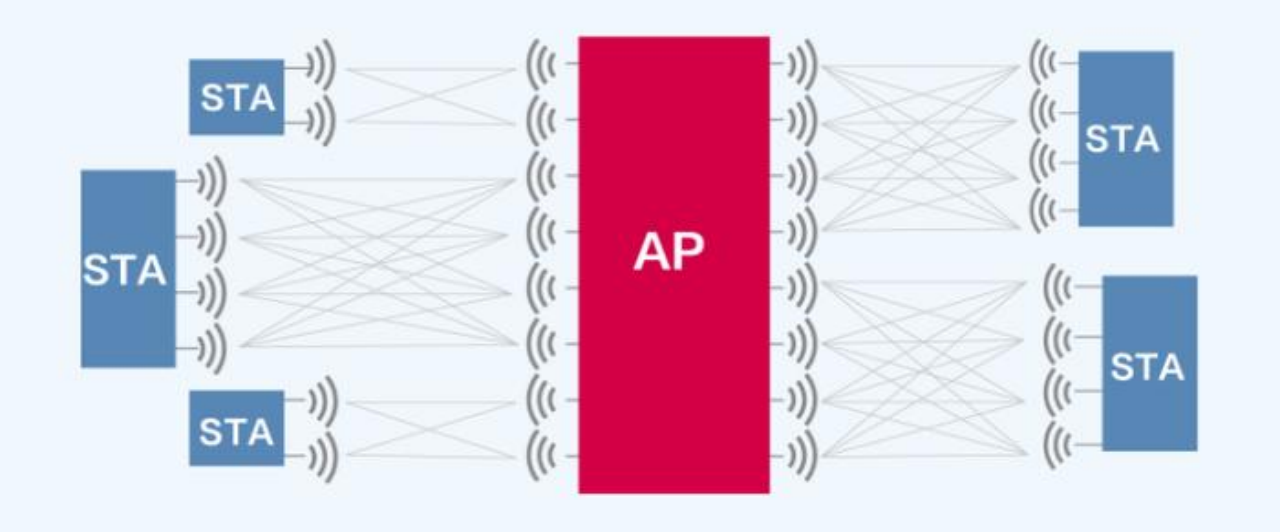
Multi link transmission technology (MLO) is a multipath transmission protocol that allows data to be transmitted through multiple paths to improve network bandwidth utilization and reliability. In MLO, data is what is industrial router divided into multiple data blocks, each of which is transmitted along a different path. After receiving data blocks, the receiving end will recombine them into complete data using a certain algorithm. In practical use, in the era of Wi Fi 6, most routers will emit signals in two frequency bands, such as 2.5G and 5G signals. 2.5G signals have a wide coverage range, high stability, but slow speed; Although 5G signals have extremely high speeds, their coverage range is often limited, and we can only choose between two signals based on our usage environment. And with the use of multi link transmission technology in Wi Fi 7, our single network device can simultaneously connect two Wi Fi hotspots, such as 2.4G+5G and 5G+5G. Foreign countries have opened up 6G frequency bands, and even 5G+6G can be used. The advantages of doing so are obvious: due to the convergence of network speeds between Link1 and Link2, higher network speeds are achieved, allowing for faster throughput; Due to the simultaneous connection of two signals, when one of them encounters interference, it can dynamically switch to a better Wi Fi link on the other, thereby obtaining a more stable and low latency network connection. WiFi 5 Wireless Router
In the era of Wi Fi 5, each channel can only send information to one receiver at the same time. In order to improve utilization, the concept of Resource Unit (RU: ResourceUnit) was introduced on Wi Fi 6. Wi Fi 6 uses a new Orthogonal Frequency Division Multiple Access (OFDMA) technology: multiple users can use the same channel simultaneously without interfering with each other. OFDMA technology divides the spectrum into multiple subcarriers, which can be independently used by different users. Each subcarrier can carry different data symbols, thereby achieving the goal of multiple users transmitting data simultaneously. Taking the 20MHz channel as an example, there are a total of 256 subcarriers in this frequency band, but only 242 subcarriers are effective. According to the regulations of the Wi Fi alliance, the minimum resource unit (RU) consists of 26 subcarriers. This means that within a channel, resources can be divided into different RUs, each containing a different number of effective subcarriers.
Specifically, an RU can contain 26 (26 tone RU), 52 (52 tone RU), 106 (106 tone RU), or 242 (242 tone RU) effective subcarriers.
In Wi Fi 7, the concept of Multiple Resource Units (MRUs) was introduced, meaning that a user can correspond to a combination of multiple RUs. For example, a user can use a combination of 26 tone RU and 52 tone RU simultaneously, or a combination of 484 tone RU and 996 tone RU. This flexible resource allocation method enables Wi Fi 7 to better adapt to communication needs in different scenarios, improve network bandwidth utilization, and enhance user communication experience.
For the technology of leading code punching, it is not a completely new one and has already been applied in Wi Fi 6. However, due to cost constraints, it is an optional technology in the Wi Fi 6 standard and has not been widely promoted. In Wi Fi 7, this technology has become a mandatory standard, and all products that meet the Wi Fi 7 standard will support preamble punching.wifi industrial router hight power
In the previous text, we mentioned that we generally improve the speed through channel bundling, that is, bundling 8 20MHz channels into one 160MHz channel. However, in practice, due to transmission requirements, priority control, compatibility, and other reasons, channel bundling can be divided into primary and secondary channels. For example, a 40MHz channel is often composed of a 20MHz main channel and a 20MHz auxiliary channel; A 80MHz channel typically consists of two 20MHz main channels and two 20MHz auxiliary channels, and so on.
According to the channel bundling protocol, channel bundling must adhere to two principles: first, only continuous channels can be bound; Secondly, in bundled channel mode, the secondary channel can only transmit information when the main channel is clean and interference free.wilford industries train route
Before Wi Fi 7, it was common to encounter situations where once the auxiliary channel in the combination was interfered with, it could not be combined into a wider main channel. For example, in an 80MHz channel, if the 20MHz auxiliary channel was interfered with, the overall 40MHz main channel composed of it would be an unclean channel, and the 40MHz auxiliary channel would not be able to transmit information; Furthermore, if they are bundled into an 80MHz main channel, they will also lose their effectiveness. In the end, a 160MHz channel will only have 20MHz left for normal use due to interference from a 20MHz channel, and 7/8 channel resources will be wasted.
And leading code punching was born to solve this problem. It can actively shield the interfered 20MHz auxiliary channel without affecting the main channel to form a wider channel. The 20MHz main channel can still form a 60MHz channel with the 40MHz auxiliary channel, and then form a 140MHz channel with the 80MHz auxiliary channel. Compared to the previous Wi Fi standards, the anti-interference ability of Wi Fi 7 has been greatly improved, and information can still be transmitted quickly even in interference environments.
Finally, to summarize, compared to Wi Fi 6/6E, Wi Fi 7 has a maximum transmission rate of 30Gbps, which is a huge improvement compared to Wi Fi 6's 9.6Gpbs; In terms of bandwidth, Wi Fi 7 can reach up to 320MHz, which is exactly twice the size of Wi Fi 6's maximum 160MHz; In terms of modulation, the 4096-QAM of Wi Fi 7 can adapt to stronger transmission changes compared to the 1024-QAM of Wi Fi 6. Finally, combined with Wi Fi 7's stronger anti-interference ability in complex environments, according to relevant sources, the overall speed of Wi Fi 7 will have a chance to reach about three times that of Wi Fi 6.
