

To understand MU-MIMO, the first step is to understand MIMO. To explain the concept of MIMO, let's first understand what SISO is.trade routes in the industrial revolution
SISO
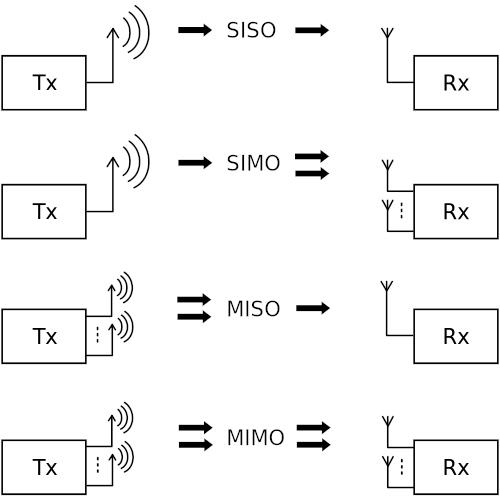
SISO stands for single input and single output, which is easy to understand. In the field of wireless routers, it can be simply explained as using one antenna for both sending and receiving. On the basis of SISO, SIMO and MISO technologies have been developed, representing single in multiple out and multiple in single out, respectively.route de l industrie
MIMO
MIMO means multiple inputs and multiple outputs, referring to the situation where a message is transmitted by multiple antennas at the transmitting end and received by multiple antennas at the receiving end. It utilizes multiple antennas at the transmitting end to independently transmit signals, while using multiple antennas at the receiving end to receive and recover the original information, achieving higher transmission rates at a lower cost.
MIMO technology can be traced back to 1908 when the famous Italian radio engineer Marconi proposed using it to resist fading. In the 1970s, it was proposed to use multiple input and multiple output technology in communication systems, but the groundbreaking work that greatly promoted the use of multiple input and multiple output technology in wireless mobile communication systems was completed by scholars from Bell Laboratories in the 1990s. Network Switches
SU-MIMO
In the field of wireless routers, MIMO is not new either. Ten years ago, with 802.11n, traditional MIMO technology was already a standard configuration. The conventional MIMO can be referred to as SU-MIMO, where SU stands for Single User, meaning "Single User Multiple In Multiple Out". Although it can improve the network communication speed between the router and client devices through multi link simultaneous transmission, the router can only communicate with one client device at the same time and in the same frequency band. Therefore, even if the client device cannot fully occupy the wireless bandwidth of the router, the router cannot allocate the remaining bandwidth to other devices for use. 4G Module
MU-MIMO
MU-MIMO technology adds a multi-user simultaneous communication mechanism on the basis of conventional MIMO, so MU-MIMO can utilize all wireless bandwidth. In the case of multi-user access, the network latency of each device will be improved significantly.route des industries saint maclou
MU-MIMO Implementation Requirements
To use MU-MIMO technology, not only does the router need to support MU-MIMO functionality, but all terminal connected devices must also support it. As long as any device in the network environment does not support MU-MIMO, the router will be in a normal MIMO mode of rotating queues. In reality, the popularity of MU-MIMO devices is not high, and the iPhone XS only supports 2x2 MIMO from this generation onwards.
In addition, to achieve good results, the number of transmission channels (antennas) in MU-MIMO routers must be greater than the sum of terminal transmission channels. However, current wireless routers generally have a maximum of 4x4 MU-MIMO, and after WiFi6, they can reach 8x8 MU-MIMO to have a wider range of application scenarios, but many conditions still need to be met to benefit. Wifi 6 Wireless Router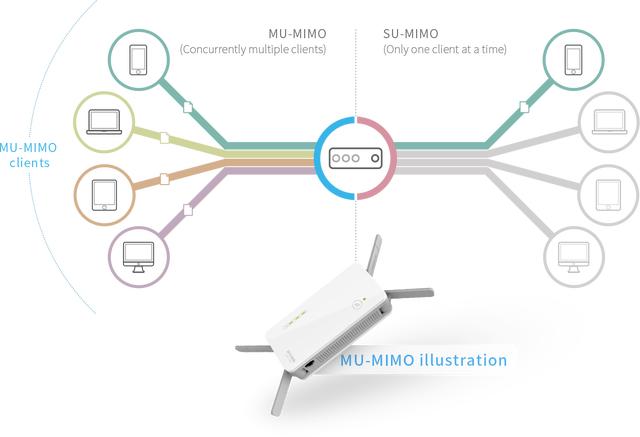
Finally, MU-MIMO technology is mainly developed by Qualcomm, while other brands such as MediaTek and Broadcom are relatively backward, resulting in poor compatibility between each brand. In some scenarios, MU-MIMO technology, which claims to improve network speed, actually leads to a decrease in actual network speed.
